
Day 12
226.翻转二叉树
这道题目理解的不够深入,建议大家先看视频讲解,无论做过没做过,都会有很大收获。
题目链接:https://leetcode.cn/problems/invert-binary-tree
文章讲解:https://programmercarl.com/0226.翻转二叉树.html
视频讲解:https://www.bilibili.com/video/BV1sP4y1f7q7
思路分析
本题是经典题目,务必掌握,翻转的本质就是交换每个节点的左右孩子,可以通过遍历的方式,遍历节点当作处理对象,交换其左右孩子
前序遍历
class Solution1 {
    public TreeNode invertTree(TreeNode root) {
        if (root == null){
            return null;
        }

        // 前序遍历
        swapChildren(root); // 根
        invertTree(root.left); // 左
        invertTree(root.right); // 右

        return root;
    }

    // 交换节点左右孩子
    public void swapChildren(TreeNode root){
        TreeNode temp = root.left;
        root.left = root.right;
        root.right = temp;
    }
}层序遍历
class Solution2 {
    public TreeNode invertTree(TreeNode root) {
        if (root == null) {
            return null;
        }
        // 层序遍历
        ArrayDeque<TreeNode> deque = new ArrayDeque<>();
        deque.offer(root);
        while (!deque.isEmpty()) {
            // 记录当前层的节点个数,明确出队元素
            int size = deque.size();
            // 出队
            while (size-- > 0) {
                TreeNode node = deque.poll();
                swapChildren(node);
                if (node.left != null) {
                    deque.offer(node.left);
                }
                if (node.right != null) {
                    deque.offer(node.right);
                }
            }
        }
        return root;
    }

    // 交换节点左右孩子
    public void swapChildren(TreeNode root) {
        TreeNode temp = root.left;
        root.left = root.right;
        root.right = temp;
    }
}⭐ 二叉树第一周小结
https://programmercarl.com/周总结/20200927二叉树周末总结.html#周一
101. 对称二叉树
先看视频讲解,会更容易一些。
题目链接:https://leetcode.cn/problems/symmetric-tree/
文章讲解:https://programmercarl.com/0101.对称二叉树.html
视频讲解:https://www.bilibili.com/video/BV1ue4y1Y7Mf
思路分析
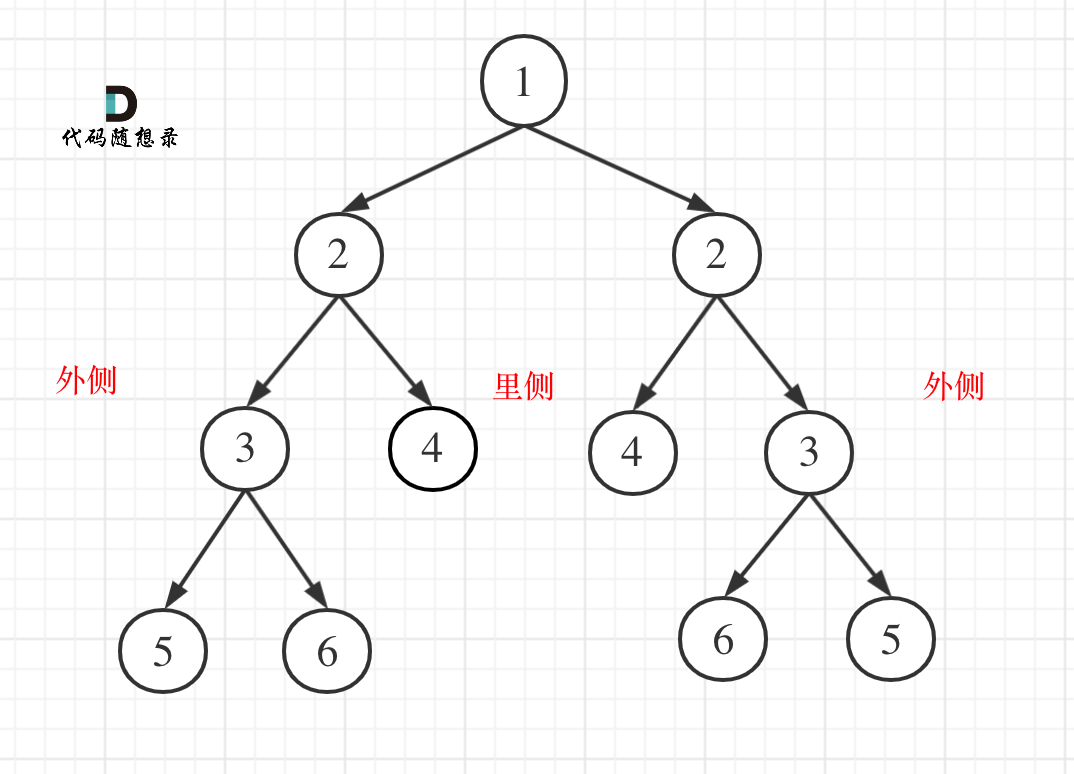
翻转的本质就是比较根节点的左右子树能否相互翻转,根据对称的特点,分别比较左右子树的各个节点,分类讨论即可
- 外侧节点需要相同:左子树的左孩子 = 右子树的右孩子
- 内侧节点需要相同:左子树的右孩子 = 右子树的左孩子
题解
class Solution {
    public boolean isSymmetric(TreeNode root) {
        return compare(root.left, root.right);
    }

    private boolean compare(TreeNode left, TreeNode right) {

        if (left == null && right != null) {
            return false;
        }
        if (left != null && right == null) {
            return false;
        }

        if (left == null && right == null) {
            return true;
        }
        if (left.val != right.val) {
            return false;
        }
        // 比较外侧
        boolean compareOutside = compare(left.left, right.right);
        // 比较内侧
        boolean compareInside = compare(left.right, right.left);
        return compareOutside && compareInside;
    }
}补充题目
- 100 相同的树:https://leetcode.cn/problems/same-tree
- 572 另一颗树的子树:https://leetcode.cn/problems/subtree-of-another-tree
104.二叉树的最大深度
什么是深度,什么是高度,如何求深度,如何求高度,这里有关系到二叉树的遍历方式。
大家 要先看视频讲解,就知道以上我说的内容了,很多录友刷过这道题,但理解的还不够。
题目链接:https://leetcode.cn/problems/maximum-depth-of-binary-tree/description/
文章讲解: https://programmercarl.com/0104.二叉树的最大深度.html
视频讲解:https://www.bilibili.com/video/BV1Gd4y1V75u
思路分析
前序(根左右)求的就是深度
- 二叉树节点的深度:指从根节点到该节点的最长简单路径边的条数或者节点数(取决于深度从 0 开始还是从 1 开始)
后序(左右根)求的是高度
- 二叉树节点的高度:指从该节点到叶子节点的最长简单路径边的条数或者节点数(取决于高度从 0 开始还是从 1 开始)
关键点:根节点的高度就是二叉树的最大深度
理解
- 深度:通过前序遍历,优先处理根节点,从上往下走,逐层计算高度
- 高度:通过后序遍历,最后处理根节点,实现把高度返回给上一层
后序遍历
class Solution {
    public int maxDepth(TreeNode root) {
        if (root == null) {
            return 0;
        }
        int leftDepth = maxDepth(root.left);
        int rightDepth = maxDepth(root.right);
        return Math.max(leftDepth, rightDepth) + 1; // 取最大高度
    }
}层序遍历
class Solution {
    public int maxDepth(TreeNode root) {
        if(root == null) {
            return 0;
        }
        Deque<TreeNode> deque = new LinkedList<>();
        deque.offer(root);
        int depth = 0;
        while (!deque.isEmpty()) {
            int size = deque.size();
            depth++; // 计算深度
            while(size-- > 0) {
                TreeNode node = deque.poll();
                if (node.left != null) {
                    deque.offer(node.left);
                }
                if (node.right != null) {
                    deque.offer(node.right);
                }
            }
        }
        return depth;
    }
}111.二叉树的最小深度
先看视频讲解,和最大深度 看似差不多,其实 差距还挺大,有坑。
题目链接:https://leetcode.cn/problems/minimum-depth-of-binary-tree
文章讲解:https://programmercarl.com/0111.二叉树的最小深度.html
视频讲解:https://www.bilibili.com/video/BV1QD4y1B7e2
思路分析
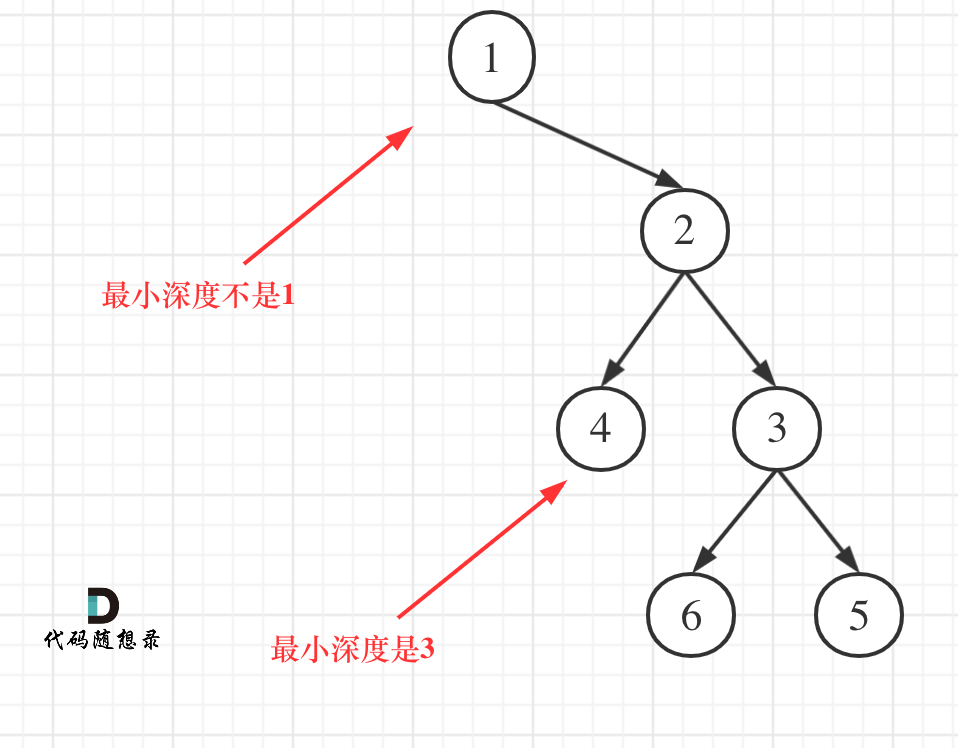
最小深度:是从根节点到最近叶子节点(不为空)的最短路径上的节点数量
本题依然可以采用上题的思路,采用后序遍历,但是需要判断空节点
后序遍历
class Solution {
    public int minDepth(TreeNode root) {
        if (root == null) {
            return 0;
        }
        int leftDepth = minDepth(root.left);
        int rightDepth = minDepth(root.right);
        if (root.left == null) {
            return rightDepth + 1;
        }
        if (root.right == null) {
            return leftDepth + 1;
        }
        // 左右结点都不为null
        return Math.min(leftDepth, rightDepth) + 1;
    }
}层序遍历
class Solution {
    public int minDepth(TreeNode root) {
        if (root == null) {
            return 0;
        }
        Deque<TreeNode> deque = new LinkedList<>();
        deque.offer(root);
        int depth = 0;
        while (!deque.isEmpty()) {
            int size = deque.size();
            depth++;
            while(size-- > 0) {
                TreeNode poll = deque.poll();
                if (poll.left == null && poll.right == null) {
                    // 是叶子结点,直接返回depth,因为从上往下遍历,所以该值就是最小值
                    return depth;
                }
                if (poll.left != null) {
                    deque.offer(poll.left);
                }
                if (poll.right != null) {
                    deque.offer(poll.right);
                }
            }
        }
        return depth;
    }
}